Infamous Led Zeppelin bio Hammer of the Gods has more or less been talked out down the years. It's enough to say here that its accuracy has been disputed and that it's more interested in who Page, Plant et al did then what they did.
As such, it might not be a very good music biography but it is a) wildly entertaining and b) a great illustration of how things can be very different for the super-rich. And unlike many of their contemporaries Led Zeppelin were very good at making money.
Enablers, privateers and hangers-on
Money allowed the lucky Zeps to insulate themselves from the world and bourgeois disapproval with a network of enablers (doctors or drug dealers) enforcers (road crew) and boosters (consorts and journalists). And in the case of Jimmy Page, an additional chorus of occultists.
They could afford - literally and metaphorically - to turn their back in private on conventional mores to a greater extent than ever before.
Generally, the mainstream can cope with all of this - the road of excess and its consequences lends itself well to a tragedy and the return of the moral status quo (see pretty much most confessional rock autobiographies ever written, with the possible exception of Lemmy's).
And in many ways - the hyper-masculinity and alleged cases of terrible, misogynistic behaviour by band members and road crew - Led Zeppelin were part of the problem rather than part of the solution in any event.
But then again, as Hammer of the Gods notes in passing between groupie stories, they took the counter-culture (and Robert Plant appears to have been painfully sincere about this) to the American Heartland like no other band of the 1970's.
Conclusion with sphinx-like utterances : Money isn't just value, it creates values, sometimes bad ones, but not always, often a mix of good and bad.
Over- or under-estimate its effect at your peril.
Thursday, August 22, 2013
Tuesday, August 20, 2013
Organisers update: some musings on (non) culture-change
Chuffed to get this article in Change Your World (our activist magazine) about the Organisers project. These pieces are often written and edited by committee, but I'm in there somewhere with this one.
We're gearing up for opening applications for the first batch of Organisers at the start of September, so a summer of planning and bottoming things out is about to be given its first trial.
Among other things, that will probably lead to some verbal riffing and asides as I experiment with talking to people about the vast potential that this project has.
Organisers = culture change?
One issue I'm still grappling with is the extent to which Organisers represent a cultural shift for us at Friends of the Earth. Here's my current answer, as adapted from the project FAQ.
I think we'll be surprised how much it won't be much of a culture change, actually.
On the one hand, it does present an opportunity to look over the fence, see what others are doing across the campaigning spectrum, and cherry pick the best bits. For example, understanding what we can learn from Transition.
To go back to Transition for a moment, you'd probably find at least some of their methods being already employed by us in some places, using our own language and subcultural idiom.
Now, I'm not holding up Transition an exemplar for everything, but it is a network which at its best appears to have absolutely put facilitation, empowerment and creativity at the heart of what it does. How can we not want to learn from that?
On the other hand, it's also feel it's also a chance to reflect on and consolidate the best practice of local groups right now. The obvious thing to do at this point would be to reference the giants of the Friends of the Earth grassroots - your Manchesters, your Birminghams - but it's also about making sure that Organisers learn from the smaller groups that achieve great things as well.
There's inevitably going to be some novelty to the project - I'd be sorely disappointed if there wasn't, to be honest. But we'll be talking evolution, not revolution. At least most of the time.
Sunday, August 18, 2013
Wilderness Festival: signposts to the future and neartopian spaces
We're talking a lot about our experience at Wilderness Festival - officially, unofficially and internally.
I think we've conveyed what an amazing amount of fun it was, as well as the breadth of activity we were involved in: music, bee-awareness-raising, talks, debates and workshops.
What I don't think has come out yet is how potentially Wilderness points to a new way forward for us.
Allow me to elaborate. :-)
We - our direct marketing team, to be specific - do festivals all the time. And do a highly successful job of raising awareness and collecting interested people's contact details. We absolutely need that contact - it leads to vital online action and fundraising opportunities.
But Wilderness was the first time we've really gone to a festival and shown the audience the true depth of Friends of the Earth.
Through workshops on public speaking, campaign tactics and forum theatre which I helped to run with Tim and Ash, through talks with Tony Juniper (ex-head honcho and nature writer) and Craig Bennett (our current Director of Policy & Campaigns) we've given people much broader pathways into offline action with us.
Through these events (and not forgetting the bands, the bees and the sheer fun of what we did) we asked people if they wanted to offer us their time, to help us play the environmental game in every street.
Bees Keeley (R) and Rachel (L) meet artist Emma Ratcliffe and her bumblebee prints
And, to a degree that was both inspiring and humbling at the same time, they did. They said yes to an extent that even if the majority don't follow up on their festival commitment, we can still look forward to a lot of extra help than we expected a fortnight ago.
Festivals are Neartopian spaces
For a few years, I've been marveling at the ability of certain towns and communities - your Hebden Bridges, Bishop's Castles, Brixtons and King's Heaths - to create conditions of receptivity to new ideas as well as intellectual and artistic freedom. To transmit a sense that possible futures are not only possible but are in the process of being made right now.
No-one pretends that these places are paradise on earth - but it's enough to go there and feel that there is still forward momentum. That the prospect of a better future is not wholly stuck in the mud of history.
That's why I describe these places as Neartopian - lookout points from which you can still see a hopeful horizon. It's the same thrill, in a different context, that I get from reading the techno-utopian dreams of Wired magazine.
And festivals can be the same.
Granted, when we think of the modern festival industry, we're a long way away from the free festivals of the 1960's and 70's, or even the Second Summer of Love a decade later. Revellers often have to pay to play.
But there's something inherent in them still which reduces people's cynicism and unwillingness to listen. Something in the temporary suspension of usual ways of being and doing, in the dislocation from routine, and in the music; all of it sparks the imagination and increases receptivity to the new.
Wilderness, with its mix of music, arts, debate and carnival, does a much better job of this than most major festivals outside of Glastonbury. But it inheres in every such event, from corporate enormo-fests to the humblest village fete.
Any kind of public party is a place where we should be talking to, sharing skills and ideas with, listening to, even dancing with people about the future.
The camp outside the Balcombe fracking site is many things, but part of it is also very much the kind of shindig with heart we're talking about here.
A festival is a means of forgetting the past and disseminating hope. And a more even distribution of hope is the business I'm in.
So, I hope we'll be back at Wilderness with this in mind. But I also hope we - and I mean the whole of the movement here, local groups too - will be looking at creating or participating in smaller moments like this.
Use them to get postcards or petitions signed, sure. But think of them first and foremost as places where you can take that fair, that party to the next neartopian level.
I think we've conveyed what an amazing amount of fun it was, as well as the breadth of activity we were involved in: music, bee-awareness-raising, talks, debates and workshops.
What I don't think has come out yet is how potentially Wilderness points to a new way forward for us.
Allow me to elaborate. :-)
We - our direct marketing team, to be specific - do festivals all the time. And do a highly successful job of raising awareness and collecting interested people's contact details. We absolutely need that contact - it leads to vital online action and fundraising opportunities.
But Wilderness was the first time we've really gone to a festival and shown the audience the true depth of Friends of the Earth.
Through workshops on public speaking, campaign tactics and forum theatre which I helped to run with Tim and Ash, through talks with Tony Juniper (ex-head honcho and nature writer) and Craig Bennett (our current Director of Policy & Campaigns) we've given people much broader pathways into offline action with us.
Through these events (and not forgetting the bands, the bees and the sheer fun of what we did) we asked people if they wanted to offer us their time, to help us play the environmental game in every street.
And, to a degree that was both inspiring and humbling at the same time, they did. They said yes to an extent that even if the majority don't follow up on their festival commitment, we can still look forward to a lot of extra help than we expected a fortnight ago.
Festivals are Neartopian spaces
For a few years, I've been marveling at the ability of certain towns and communities - your Hebden Bridges, Bishop's Castles, Brixtons and King's Heaths - to create conditions of receptivity to new ideas as well as intellectual and artistic freedom. To transmit a sense that possible futures are not only possible but are in the process of being made right now.
No-one pretends that these places are paradise on earth - but it's enough to go there and feel that there is still forward momentum. That the prospect of a better future is not wholly stuck in the mud of history.
That's why I describe these places as Neartopian - lookout points from which you can still see a hopeful horizon. It's the same thrill, in a different context, that I get from reading the techno-utopian dreams of Wired magazine.
And festivals can be the same.
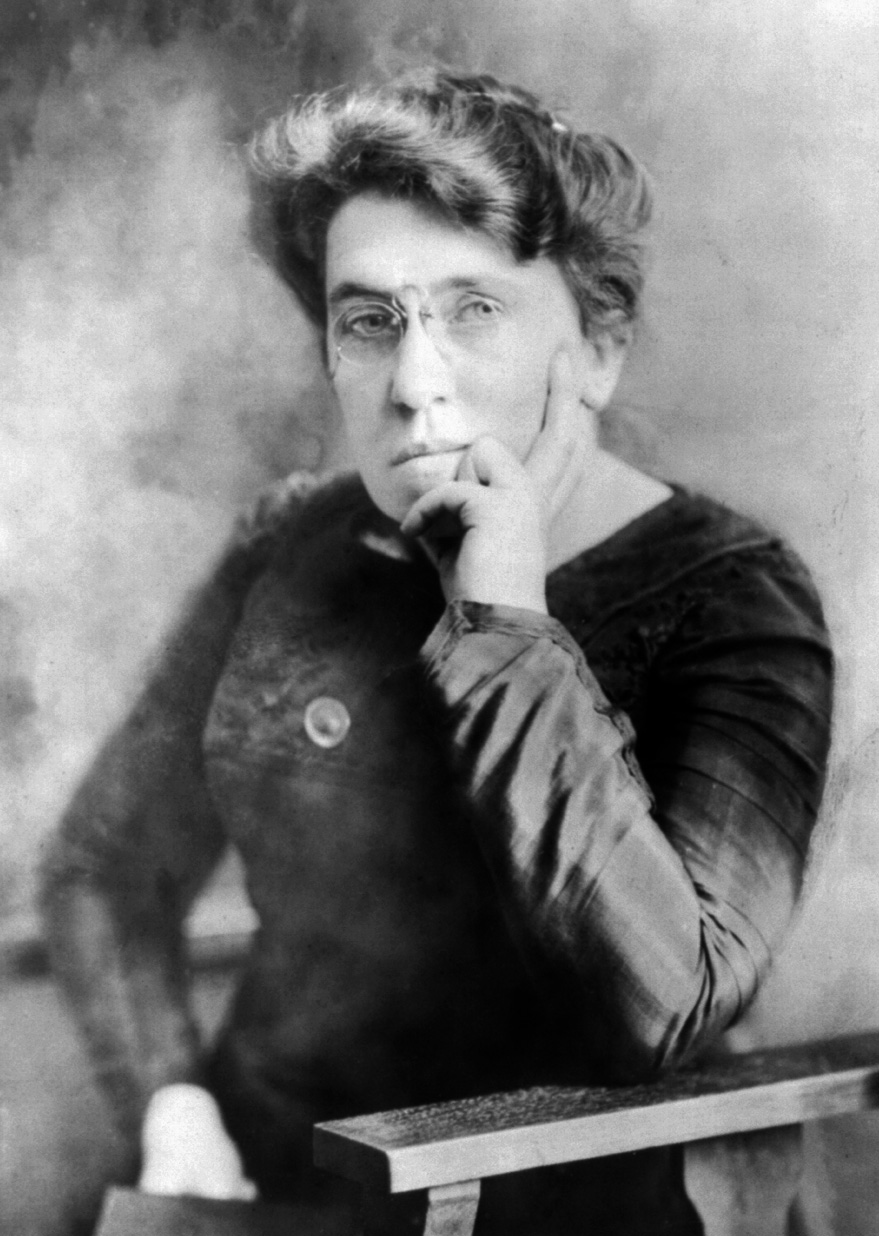
"If I can't dance, it's not my revolution" - Emma Goldman
Granted, when we think of the modern festival industry, we're a long way away from the free festivals of the 1960's and 70's, or even the Second Summer of Love a decade later. Revellers often have to pay to play.
But there's something inherent in them still which reduces people's cynicism and unwillingness to listen. Something in the temporary suspension of usual ways of being and doing, in the dislocation from routine, and in the music; all of it sparks the imagination and increases receptivity to the new.
Wilderness, with its mix of music, arts, debate and carnival, does a much better job of this than most major festivals outside of Glastonbury. But it inheres in every such event, from corporate enormo-fests to the humblest village fete.
Any kind of public party is a place where we should be talking to, sharing skills and ideas with, listening to, even dancing with people about the future.
The camp outside the Balcombe fracking site is many things, but part of it is also very much the kind of shindig with heart we're talking about here.
A festival is a means of forgetting the past and disseminating hope. And a more even distribution of hope is the business I'm in.
So, I hope we'll be back at Wilderness with this in mind. But I also hope we - and I mean the whole of the movement here, local groups too - will be looking at creating or participating in smaller moments like this.
Use them to get postcards or petitions signed, sure. But think of them first and foremost as places where you can take that fair, that party to the next neartopian level.
"Free your mind and your ass will follow" - Funkadelic
Saturday, August 17, 2013
Stalin on my pavement, what am I gonna do?
This is the work of the - deep breath - Communist Party of Britain (Marxist-Leninist) (URL just out of shot). Not to be confused, of course, with the Communist Party of Britain, or the Communist Party of Britain Provisional Central Committee, to which I managed to attribute this artwork first time around (blushes and apologies to the CPBPCC comrades)
Quite apart from the fact they've sprayed the pavement with Stalin outside the building where I work, this is bad marketing in bad taste.
Why? Well, it's as simple as debased dialectic materialism, my friend.
Once you exclude the people who won't recognize him or are wondering why they are treading on Colonel Sanders, most of the rest of us are still thinking something along the lines of "Stalin, ugh!"
Or, slightly more eloquently, if our passer by knows his Solzhenitsyn, "didn't that dude preside over the deaths of hundreds of thousands of his own people?"
That's right. Not forgetting to mention the arbitrary imprisonment, forced resettlement, purges and terror.
They could have left us Che, or Marx. Heck, even Lenin Cat. They all have impeccable socialist credentials.

See more on Know Your Meme
But no, they give us Uncle Joe, who with all his historical baggage is pretty much beyond rehabilitation.
Either they've got some seriously deep marketing game going on, or they really haven't thought this through.
Thursday, August 15, 2013
He's a complicated bee, and no-one understands him but the other 50,000 bees in his hive
We went to the wonderful Wilderness Festival last weekend in
Oxfordshire. Our mission: to entertain, to inform, to tell as many
people as possible why the #beecause matters.
Here is our story, tweet by tweet.
Here are more photos from the weekend, including me dressed as a disco bee
Here is our story, tweet by tweet.
Here are more photos from the weekend, including me dressed as a disco bee
Wednesday, August 14, 2013
Bumblebees or bulldozers: a Forum Theatre workshop we ran at Wilderness Festival
Last weekend we were at Wilderness Festival, having a fantastic time running workshops and helping out at a beehive stall and a busking stage.
Photos and storifications will follow later this week, but I thought I'd start by sharing the plans for the workshop I facilitated, in the spirit of open source training.
Oh, and thanks muchly to Ash, Tim and Rachel for all the help on the day, and to Niall for coming up with the original workshop on which our effort was based.
What’s that? I can decide what happens?
Yes. This is forum theatre – interactive political and social drama where the audience can step into the shoes of the actors to explore problems and find their own solutions to oppression, injustice or marginalisation.
How does it work?
• We run through the play once.
• We ask you what could have happened differently
• You (the audience) then either give us advice about how to play the roles differently.
• Or …. you can step into our roles and play them differently
We then start the play again, with the same cast or a different cast, depending on the audience's choices.
But this time, at any point you can shout STOP (don’t forget to wave the sign on the back of this sheet) and replace the current cast on stage to do things differently.
If you like the quick synopsis of the plot below, you can download the entire workshop outline here.
Bumblebees or bulldozers? False oppositions in
Commuterville
Trouble is afoot in the county of Barsetshire, prime commuter belt
country in the Home Counties around London. In the town of Barchester,
developers plan a new housing development on an unused patch of land which
belongs to the council where an old depot once stood. Since falling into
disuse, the site has become an unofficial nature reserve, where there are
unconfirmed sightings of the endangered Long-Horned Bee, to name but one
example of wildlife found there.
But times are hard, and the council proposes to sell the land off for
housing despite its value to nature and to the local community. The land will
provide flats and homes for affluent commuters, but the council have made it
clear that they will make it a condition of sale that affordable housing is
also provided for local families and first time buyers
Some concerned local citizens have started a Friends of the Earth group
to make the case for preserving the land as a nature reserve. And appearing on
the Your Voice With Richard Roardean phone in show on Barsetshire FM will be
their first appearance in the media – good
luck to them!
They’ll need it.
The cast
Richard Roardean – the phone in DJ
Stewart Challis – the local councillor defending the land sale
The protagonist – the local environmentalist opposing the land sale
The Joker/Facilitator
Sheila Hamilton - Optional extra character and concerned local
Additional concerned members of the local area phoning in.
Monday, August 5, 2013
Lord Valentine's Castle: challenging the White Spaceman's Burden
Robert Silverberg's Lord Valentine's Castle is not as good a book as I had thought when I was 16. It's rags-to-riches, amnesia-to-ambrosia, throne-reclaiming plot is a little too adolescent wish-fulfilment for my taste these days. The love interest is something of a cypher, which back then would have counted in its favour too, but nowadays rather less so. And we have the usual SF/fantasy conflation of species with characterisation.
That said, it's aged rather better than its publication in '79 than might be expected. Part of the reason for it is that LVC is a massive, heartfelt homage to the 20's and 30's planetary romances of Edgar Rice Burroughs and his pulp comrades. As such, Silverberg's world building is chock-full of old wierd tropes - colourful aliens with colourful names and psychic powers, half-understood ancient technologies and epic architectural follies.
He also gives square-jawed science fantasy something of a 70's makeover. Valentine, the protagonist, is John Carter by way of Donovan, a gentle soul disinclined to violence, reluctant to abandon his Good Life as a travelling juggler to do the right thing, man. Although his Hamlet moment is mercifully brief, that it happens at all is a mark of the dropout decade.
The besetting sin of Silveberg's world is colonisation and the driving of the indigenous race into reservations - a theme amplified in the sequel Valentine Pontifex and again a direct challenge to the unabashed jingoism of the pulps.
Whether Valentine succesfully checks his privilege over the course of the two books is a question I prefer to leave open - it very much depends on how easy you find liberal reconciliation to swallow. What this Aquarian take on science-fantasy certainly achieves is that rare thing in the genre - a set of villains whose motivations are entirely reasonable even if their means are deplorable.
And that, utlimately, is the achievement of Lord Valentine's Castle: revisionist pulp SF which introduces a (slightly) greater moral complexity and attempts to address the genre's hypermasculinity and White Spaceman's Burden, while still retaining the joie de vivre and exoticism of its predecessors.
Subscribe to:
Posts (Atom)