My favourite reading from 2016. Thanks due in particular to family, friends, Mr B's Emporium in Bath with its book spa service and the Hugo Awards for passing many of these my way.
Links are to reviews on the blog.
Ben Aaronovitch, Whispers Underground, Broken Homes, Foxglove Summer and this year's The Hanging Tree
Viv Albertine, Clothes, Clothes, Clothes, Music, Music, Music, Boys, Boys, Boys
Charlie Jane Anders - All The Birds In The Sky
Alan Bennett, The Uncommon Reader
H G Bissinger, Friday Night Lights
Lois McMaster Bujold, Penric's Demon
Becky Chambers, The Long Way To A Small Angry Planet
Samuel R Delany, Dhalgren
Philip K Dick, Do Androids Dream Of Electric Sheep, The Man In The High Castle and Valis
William Goldman, The Princess Bride
Doris Kearns Goodwin, Team Of Rivals: The Political Genius Of Abraham Lincoln
Frances Hardinge, The Lie Tree
Barbara Harford, Greenham Common: Women At The Wire
Alice Hoffman, Practical Magic
Dave Hutchinson, Europe After Midnight
N K Jemisin, The Fifth Season
Ursula Le Guin, The Wind's Twelve Quarters
Cixin Liu, The Dark Forest
R K Narayan, The Bachelor Of Arts
Naomi Novik, Uprooted
Nnedi, Okorafor, Binti
Sydney Padua, The Thrilling Adventures Of Babbage And Lovelace
Joanna Russ, Extraordinary People
Philip Sandifer, Guided By The Beauty Of Their Weapons
Neil Stephenson, Seveneves
Charles Stross, The Annihilation Score
Koushun Takami, Battle Royale
James Tiptree Jr, Her Smoke Rose Up Forever
Catherynne M Valente, Deathless
Jo Walton, The Just City
Alyssa Wong, Hungry Daughters of Starving Mothers and The Fisher Queen
Showing posts with label history. Show all posts
Showing posts with label history. Show all posts
Sunday, December 18, 2016

Sunday, October 23, 2016
Prime Ministers with pubs named after them
On the back of the John Wilkes post, and because it's been a while since we've done a list on the blog:
If I've missed anything out (entirely possible) add a comment and I'll update this post.
Twentieth century Prime Ministers with pubs (or other drinking establishments) named after them
Arthur Balfour (a Conservative Club in Bargoed, Caerphilly)
Winston Churchill (Bilbao, Montreal and less glamorously a Harvester in Rochdale; probably more besides)
Harold Wilson (the Lord Wilson in Huddersfield)
Margaret Thatcher (Maggie's Club in West London, natch)
Honourable mentions
David Lloyd George (a function room and former bar at the Liberal Club)
Jim Callaghan (has a coffee shop named after him in the James Callaghan Building at Swansea University)
Surely a missed opportunity, left-wing types?
Clement Attlee
Nineteenth century Prime Ministers without pubs named after them
The nineteenth century was very much the golden age of pub-naming if you were a politician (especially an aristocratic one)
Spencer Perceval (apparently being the only PM to have been assassinated doesn't warrant commemoration in this form)
Earl of Liverpool (no theories on this one)
Viscount Goderich (should have had a catchier title if he wanted a pub name, perhaps)
A business proposal
A small chain of pubs each named and themed after a different twentieth century Prime Minister. After all, there's clearly a gap in the market after 1900.
If I've missed anything out (entirely possible) add a comment and I'll update this post.
Twentieth century Prime Ministers with pubs (or other drinking establishments) named after them
Arthur Balfour (a Conservative Club in Bargoed, Caerphilly)
Winston Churchill (Bilbao, Montreal and less glamorously a Harvester in Rochdale; probably more besides)
Harold Wilson (the Lord Wilson in Huddersfield)
Margaret Thatcher (Maggie's Club in West London, natch)
Honourable mentions
David Lloyd George (a function room and former bar at the Liberal Club)
Jim Callaghan (has a coffee shop named after him in the James Callaghan Building at Swansea University)
Surely a missed opportunity, left-wing types?
Clement Attlee
Nineteenth century Prime Ministers without pubs named after them
The nineteenth century was very much the golden age of pub-naming if you were a politician (especially an aristocratic one)
Spencer Perceval (apparently being the only PM to have been assassinated doesn't warrant commemoration in this form)
Earl of Liverpool (no theories on this one)
Viscount Goderich (should have had a catchier title if he wanted a pub name, perhaps)
A business proposal
A small chain of pubs each named and themed after a different twentieth century Prime Minister. After all, there's clearly a gap in the market after 1900.
Saturday, October 22, 2016
Wilkes and Lib-beer-ty
My inner history geek was pleased to find a pub in Leek named after eighteenth century radical, hellraiser and rabble-rouser (and particular thorn in the side of George III and his first Prime Minister the Earl of Bute) John Wilkes.

Wikipedia and Google tell me it's not the only pub so named - there's two more in Eastergate, West Sussex and Llandysul, Dyfed, and there used to be two more in St Ives, Cambridgeshire and Brentford, London.
This Wilkes Head claims to be one of the oldest pubs in Staffordshire, although I presume that's the site not the current premises!
As far as I am aware, Wilkes also has no connection with Leek (which by comparison explains why Northampton has honoured local MP and early humanist Charles Bradlaugh with a pub named after him). So it's doubly fascinating to see how nearly 250 years later his infamy lives on in this and a few other scattered parts of the country.

Wikipedia and Google tell me it's not the only pub so named - there's two more in Eastergate, West Sussex and Llandysul, Dyfed, and there used to be two more in St Ives, Cambridgeshire and Brentford, London.
This Wilkes Head claims to be one of the oldest pubs in Staffordshire, although I presume that's the site not the current premises!
As far as I am aware, Wilkes also has no connection with Leek (which by comparison explains why Northampton has honoured local MP and early humanist Charles Bradlaugh with a pub named after him). So it's doubly fascinating to see how nearly 250 years later his infamy lives on in this and a few other scattered parts of the country.
Wednesday, March 16, 2016
Abraham Lincoln meets Thomas Covenant
Thanks to the amazing Team of Rivals by Doris Kearns Goodwin I have now read Lincoln's Gettysburg Address for the first time. It's interesting to reflect that something that's so much a part of American cultural memory - of their rhetorical toolkit - has passed me by as a Brit up to now.
There's some variety in the surviving texts, but this is the one on the Lincoln Memorial. Since it's short enough for students to memorise it, it's short enough to reproduce in full below.
"Four score and seven years ago our fathers brought forth on this continent, a new nation, conceived in Liberty, and dedicated to the proposition that all men are created equal.
Now we are engaged in a great civil war, testing whether that nation, or any nation so conceived and so dedicated, can long endure. We are met on a great battle-field of that war. We have come to dedicate a portion of that field, as a final resting place for those who here gave their lives that that nation might live. It is altogether fitting and proper that we should do this.
But, in a larger sense, we can not dedicate -- we can not consecrate -- we can not hallow -- this ground. The brave men, living and dead, who struggled here, have consecrated it, far above our poor power to add or detract. The world will little note, nor long remember what we say here, but it can never forget what they did here. It is for us the living, rather, to be dedicated here to the unfinished work which they who fought here have thus far so nobly advanced. It is rather for us to be here dedicated to the great task remaining before us -- that from these honored dead we take increased devotion to that cause for which they gave the last full measure of devotion -- that we here highly resolve that these dead shall not have died in vain -- that this nation, under God, shall have a new birth of freedom -- and that government of the people, by the people, for the people, shall not perish from the earth."
Great, isn't it?
Now, I'm probably not the first person to have read that and then seen echoes of the Address in other writing, such is its influence. I may be the first however to have found Lincoln in US writer's Stephen Donaldson's 70's fantasy series The First Chronicles of Thomas Covenant.
Now, one of the early things I wrote on this blog was on the Covenant Chronicles - suffice to say that I find them interesting (influential, even) while at the same time deeply flawed and in certain respects repulsive. So me and these books have a degree of personal history.
But it was only when reading the Address that I recognised where some of Donaldson's linguistic tics and philosophy might well come from.
Quotes from the Chronicles such as "It is the duty of the living to give meaning to the sacrifices of the dead" and "So that beauty and truth should not pass utterly from the Earth.” are echoes of Lincoln in fantasy masquerade.
It's easy to position the Chronicles as an response to/critique of Tolkien, after the success of the Lord Of The Rings. But what I hadn't appreciated up to this point is how - just like Tolkien, ironically - inescapably American that response is in its mythology and the traditions it draws upon.
That moment when a whole new reading of a book you thought you were familiar with opens up?
That.
Oh - and if you want to read what I wrote about Covenant back in 2011, here it is in a glorious four part essay. I must have had a lot of time on my hands back then.
Part 1
Part 2
Part 3
Part 4
There's some variety in the surviving texts, but this is the one on the Lincoln Memorial. Since it's short enough for students to memorise it, it's short enough to reproduce in full below.
"Four score and seven years ago our fathers brought forth on this continent, a new nation, conceived in Liberty, and dedicated to the proposition that all men are created equal.
Now we are engaged in a great civil war, testing whether that nation, or any nation so conceived and so dedicated, can long endure. We are met on a great battle-field of that war. We have come to dedicate a portion of that field, as a final resting place for those who here gave their lives that that nation might live. It is altogether fitting and proper that we should do this.
But, in a larger sense, we can not dedicate -- we can not consecrate -- we can not hallow -- this ground. The brave men, living and dead, who struggled here, have consecrated it, far above our poor power to add or detract. The world will little note, nor long remember what we say here, but it can never forget what they did here. It is for us the living, rather, to be dedicated here to the unfinished work which they who fought here have thus far so nobly advanced. It is rather for us to be here dedicated to the great task remaining before us -- that from these honored dead we take increased devotion to that cause for which they gave the last full measure of devotion -- that we here highly resolve that these dead shall not have died in vain -- that this nation, under God, shall have a new birth of freedom -- and that government of the people, by the people, for the people, shall not perish from the earth."
Great, isn't it?
Now, I'm probably not the first person to have read that and then seen echoes of the Address in other writing, such is its influence. I may be the first however to have found Lincoln in US writer's Stephen Donaldson's 70's fantasy series The First Chronicles of Thomas Covenant.
Now, one of the early things I wrote on this blog was on the Covenant Chronicles - suffice to say that I find them interesting (influential, even) while at the same time deeply flawed and in certain respects repulsive. So me and these books have a degree of personal history.
But it was only when reading the Address that I recognised where some of Donaldson's linguistic tics and philosophy might well come from.
Quotes from the Chronicles such as "It is the duty of the living to give meaning to the sacrifices of the dead" and "So that beauty and truth should not pass utterly from the Earth.” are echoes of Lincoln in fantasy masquerade.
It's easy to position the Chronicles as an response to/critique of Tolkien, after the success of the Lord Of The Rings. But what I hadn't appreciated up to this point is how - just like Tolkien, ironically - inescapably American that response is in its mythology and the traditions it draws upon.
That moment when a whole new reading of a book you thought you were familiar with opens up?
That.
Oh - and if you want to read what I wrote about Covenant back in 2011, here it is in a glorious four part essay. I must have had a lot of time on my hands back then.
Part 1
Part 2
Part 3
Part 4
Saturday, January 19, 2013
William Gladstone: the Batman of nineteenth century politics.

Think about it - he's the serious going-on grim scion of a family of wealthy industrialists, who stalks the night trying to
Benjamin Disraeli was more the Adam West-era Batman of nineteenth century politics - there was a man who knew how to have a good time.
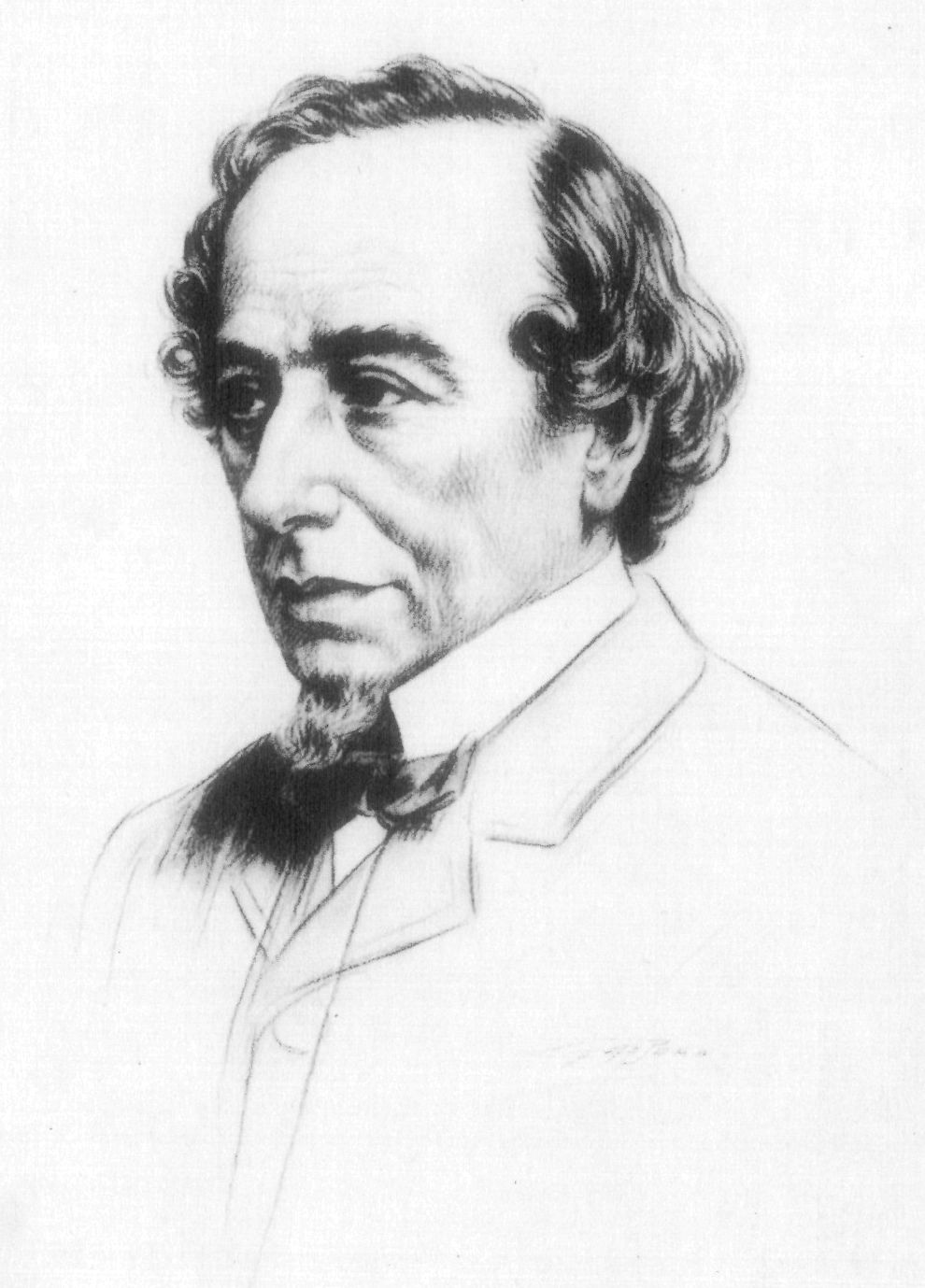
And the Duke of Wellington was, of course...

the Iron Man of the Regency period.
Any more convoluted assignment of superheroes/villains to major Victorian figures most welcome. Karl Marx as Magneto, anyone?
Subscribe to:
Posts (Atom)